📌 The One Thing That Matters Today
US technology is weakening, but corporate credit has not confirmed a broader break. Share prices show investor nerves; borrowing costs tell us whether lenders agree.
- Nasdaq 100 🔻 0.6% versus S&P 500 🔺 0.1% in today's snapshot: pressure remains concentrated in technology.
- US-listed TSMC 🔻 2.7%: chip stress has reached US trading.
- VIX, expected stock-market volatility, was 16.7, near the 43rd percentile of its past-year range: not a panic reading.
Hy Spread
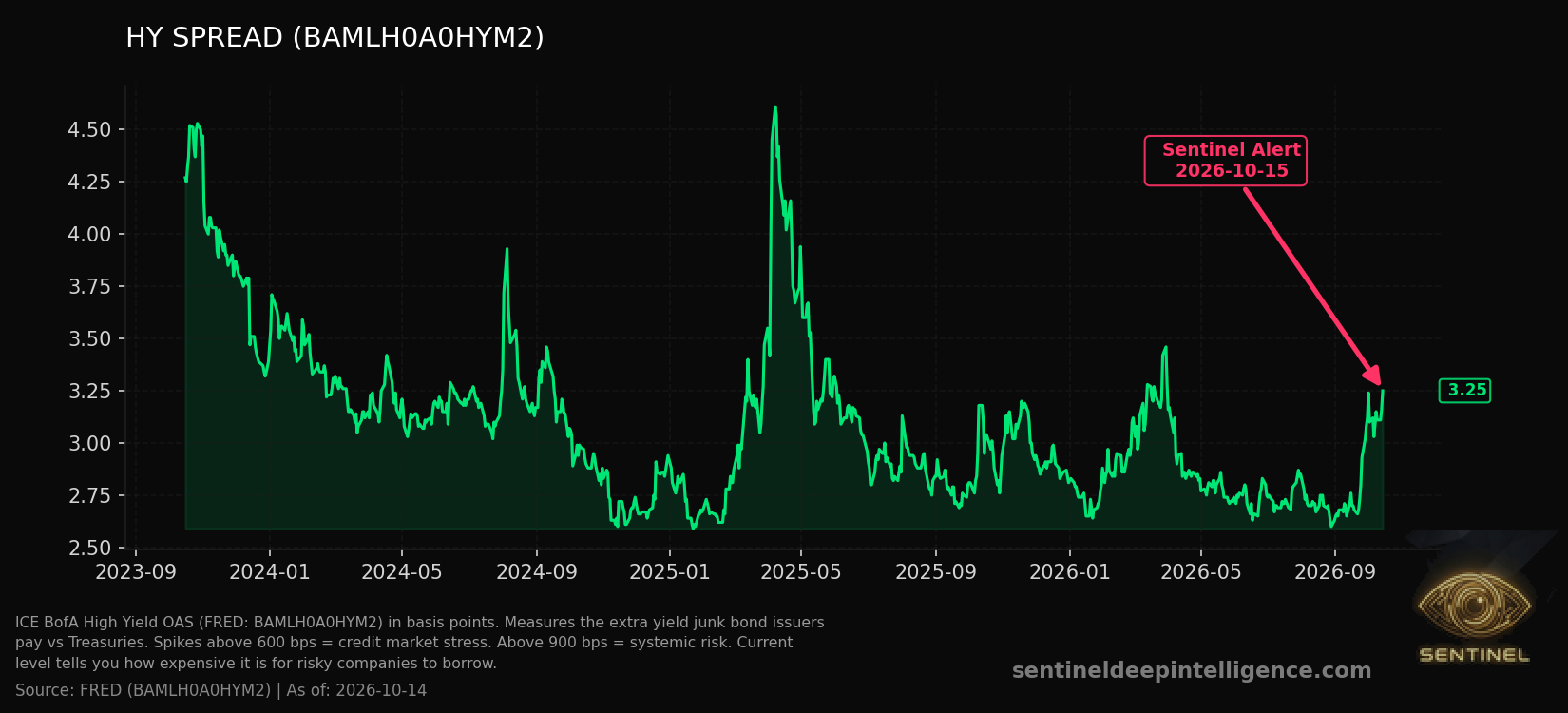
ICE BofA High Yield OAS (FRED: BAMLH0A0HYM2) in basis points. Measures the extra yield junk bond issuers pay vs Treasuries. Spikes above 600 bps = credit market stress. Above 900 bps = systemic risk. Current level…
📉 Active Lens: The Credit Check
- SIGNAL: Lenders are getting cautious, but the broader stress test is incomplete.
- FACT: The US high-yield spread, the extra interest weaker companies pay above government bonds, reached 3.25% on October 14, 🔺 49 basis points in 30 days. A basis point is 0.01 percentage point. Our playbook tests for 50 basis points of widening while stocks reach a high; stocks are falling instead.
- INTERPRETATION: If lenders demand still more compensation, financing ambitious AI projects gets harder. The spread is an early warning, not evidence of a funding freeze.
- CONFIDENCE: MEDIUM. The latest credit reading predates today's equity session.
Next 5 to 15 trading days: 50% uneven containment if spreads stabilize; 35% broader repricing if spreads and VIX rise together; 15% relief if chips recover and spreads narrow. These are judgmental scenario weights, not quoted market odds.
Watch: Sustained credit widening alongside fresh index losses challenges containment. Narrower spreads and stabilizing chips challenge contagion. The market's credit warning light is amber, not red.
- Historical frequency: All 3 of 3 selected playbook episodes, in 1998, 2007 and 2020, preceded equity declines. This is a selected, non-comparable sample; today's full divergence test is not met.